Cornell University >
Cornell Plantations >
Collections > Botanical Garden > Herb Garden
|
|
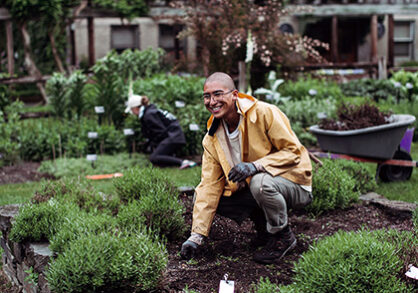
![]() A raised bed in the Herb Garden |
|||||||
|
What Are Herbs? Herbs are defined by their use or significance to humankind. They include plants valued as flavorings, medicines, and fragrances, as well as those put to other practical household or commercial use. In addition, the realm of herbs includes plants with symbolic significance or historical interests. For this reason, plants celebrated in literature, myth, and ritual also have a place in the herb garden. Rather than being staples of life, like our basic food crops, herbs contribute to our quality of life and enhance its pleasures. A stroll through the herb garden reveals the deep and enduring connection between plants and people that has existed throughout the ages.
History and Design |
|
the neighborhood children of Forest Home. After the school closed in 1964, the idea of an herb garden for Cornell University began to flourish, championed in part by Audrey Harkness O'Connor, who was editor of Cornell Plantations Magazine at the time. Richard M. Lewis, then director of Cornell Plantations, sketched the original design concept on a paper towel! It took ten years, however, to raise the funds, assemble the materials, and construct the garden. In 1974, the herb garden was finally dedicated to the late Doris Burgess Robison, an accomplished gardener, as a gift from her husband, Ellis H. Robison '18. Garden Design magazine recently called this herb garden one of the best in America.
| |
|
Our herb garden is true to its upstate New York origins. Notice the walls of native stone - some retrieved from the old building foundation under the farmhouse of Ezra Cornell, the university founder. The wrought iron gates date from about 1800. The split rail fences are also typical of this region. At the base of the sundial in the middle of the garden is a round millstone from one of the numerous mills that once lined nearby Fall Creek. See if you can also find the stone stile built into the wall at the southeast corner of the garden and Elfriede Abbe's bronze sculpture of the "Yarb Woman" (a gift of our local herb society, Auraca Herbarists), just outside the garden at the end of the pergola. Visitors love the Robison York State Herb Garden because of its diversity and its thematic presentations. It is, in essence, a reference collection of living plants that have been important in human culture throughout |
![]() Herbs are a treat for all our senses. |
| the ages. Mingled within its beds and borders are plants of the ancient world, plants used by Native Americans, and culinary plants from every corner of the globe. Let your senses explore fragrant herbs, edible flowers, and scented geraniums. Linger on the stone seats for an intimate view of the herbs in the raised beds. Learn more from the labels on every plant. | |
| For more information about the Robison York State Herb Garden, visit the Garden Gift Shop, located at the south end of the Plantations' headquarters building. Pick up a free source list for buying herb plants, purchase our videotape, The Herb Becomes the Teacher, or browse through the many herbal products handmade by members of Auraca Herbarists. | |
|
The Power of Herbs by Audrey H. O'Connor
The story of herbs is one of people who have used the fruits of the earth; who have left records on papyrus rolls, clay tables, medieval manuscripts, and printed herbals.
| ||
![]() The "Yarb Woman" symbolizes herb gatherers of all periods and places. |
Through this story runs the thread of myth and legend, of fear and awe, of superstition and magic.
Herbs made life livable. People first used the native food and fiber herbs for sustenance and shelter. They learned by trial and error, since some plants could kill. Those who survived learned the power of the seed. We shall never know who first observed a plant sprouting in the refuse heap next to a hut and witnessed the lesson of life's renewal; or who first scratched the earth, planted a seed, and started us along the path to agriculture and horticulture. Herbs made life endurable. Who was the first to discover that chewing on a stalk of yarrow eased an aching tooth? Through the ages, people found the healing plants - sometimes by accident, sometimes from observing the habits of animals. From this, the sciences of medicine and botany were born. |
|
| Herbs made life pleasurable. Throughout the ages, fragrant and colorful herbs were valued perhaps because they brought beauty, joy, and growth to the human spirit. The discovery of flower pollen in the Shanidar burial chambers in northern Iraq suggests stirrings of love and respect for the dead even among ancient people of 60,000 years ago. | ||
| The Seventeen Theme Beds | |
|
1. Ornamental Herbs Herbs with beautiful colors, forms, textures, combined for their visual and artistic effects. Pictured here is wormwood (Artemisia cv. Versicolor). |
|
2. Herbs of the Ancients Herbs with a history of use spanning thousands of years. Garlic (Allium sativum) was consumed daily by builders of the Egyptian pyramids and Roman soldiers to increase strength and endurance. |
|
3. Herbs in Literature Plants whose significance in human culture have been chronicled in literature, myth, and folklore. Basil (Ocimum basilicum) was associated with ancient funeral rites. Perhaps that is why Isabetta, in Boccacio's Decameron, planted it to conceal the head of her murdered lover. |
|
4. Bee Herbs Sources of nectar and pollen for bees, as well as plants containing oils that calm bees or sooth their stings. Variegated lemon balm (Melissa officinalis cv. Aurea) has lemon-scented leaves that can be rubbed on the skin to prevent bee stings. Leaves are also put in hives to keep bees from swarming. |
|
5. Salads and Potherbs Plants whose leaves or stems are added fresh to salads, or cooked as greens. The young leaves of strawberry blite (Chenopodium capitatum) can be eaten fresh or cooked like spinach. Its fruits are edible too. |
|
6. Edible flowers Blossoms used in salads, as garnishes, or as ingredients in cooking. Flowers of bee balm (Monarda didyma) add a splash of bright color and citrus flavor to foods and drinks. |
|
7. Herbs of the Native Americans Plants used by American Indians for medicinal, nutritional, or ceremonial purposes. The milky white sap of milkweed (Asclepias syriaca) can be applied to the skin to remove warts and soothe insect stings. |
|
8. Medicinal Herbs Healing plants from different cultures, including many whose healing properties have been substantiated by scientific research. Purple coneflower (Echinacea purpurea) is said to prevent colds and flu by boosting the immune system. |
|
9. Culinary Herbs Plants used to season and flavor food. The mild onion-flavored leaves of the chive plant (Allium schoenprasum) are tasty in salads, sandwiches, omelets, and cheese spreads. Blossoms are used to make an attractive rose-colored vinegar. |
|
10. Economic Herbs Herbs providing commercially useful products like oils, fibers, fragrances, and flavorings. The fibers of ramie (Boehmeria nivea) have been used for centuries in Chinese textiles and are now popular with contemporary clothing manufacturers. |
|
11. Dye Herbs Plants that yield natural fiber dyes or pigments used cosmetically or to color food. Fresh or faded flowers of dyer's coreopsis (Coreopsis tinctoria) yield a very colorfast dye in shades of yellow, orange, or brown. |
|
12. Tea Herbs Plants whose leaves, seeds, or flowers, are steeped to make flavorful and therapeutic herbal teas. Leaves of lemon bergamot (Monarda citriodora) are brewed into a tasty, citrus-flavored herbal tea. |
|
13. Fragrant Herbs Plants enjoyed for their scents in the garden or as ingredients in perfumes, soaps, cosmetics, sachets, and potpourris. The soothing fragrance of English lavender (Lavandula angustifolia) is a classic ingredient in many of these products. |
|
14. Sacred Herbs Herbs associated with sacred rituals or having religious symbolism. Named for the Virgin Mary, pot marigold (Calendula officinalis was the floral emblem of Lady Day, a holiday to celebrate the feast of the Annunciation. |
|
15. Scented Geraniums Geraniums whose fragrant leaves are used for flavoring or in aromatic preparations like perfumes and potpourris. These tender Pelargoniums from South Africa are especially beautiful for their variety of leaf textures. |
|
16. Savory Seed Herbs Herbs whose aromatic seeds are used for cooking and baking. The pungent seeds of black cumin (Nigella sativa) are used as a substitute for pepper in some curries and breads. |
|
17. Tussie-Mussies and Nosegays Traditional bouquet flowers that are associated with particular sentiments. Because the flower retains its bright color when dried, the globe amaranth (Gomphrena globosa) signified immortality or unfading love. |
| Photos contributed by: S. Camazine, Diane Miske, Don Rakow, and F. Robert. Wesley Brochure made possible through the generosity of Mary Helen Sears '50. | |
| Last modified: 04/18/2005 11:29:54 PM |